The Zero Capital Thesis: Freedom, Investing, and Going Solo
Most investing advice starts with what to do once you have money.
But what if you’re starting with almost none?
That’s where I found myself.
Not broke, but not flush either. Not in crisis — but quietly restless. I wanted to invest. I wanted to build wealth. But I wasn’t willing to grind my face off, abandon creativity, or mortgage my freedom just to “get in the game.”
There had to be another way. One that didn’t require a trust fund, a $50K minimum check size, or a full-time job in VC. One where small bets, clear thinking, and real conviction could compound into something meaningful — without selling my soul or my time.
So I started Zero Capital.
The Moment of Clarity
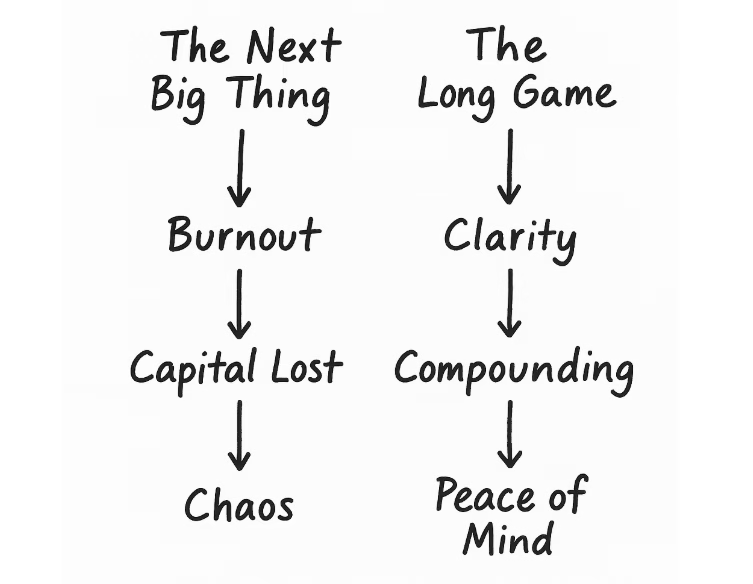
I’ve been in business since I was young. Always chasing the next big thing. Always in motion.
I’ve tried everything — tourism, building, FX, crypto, proptech, F&B, consulting. I even started a cold-pressed juice company in Asia. I’ve raised money, lost money, won big, and watched it all slip away chasing something newer, shinier, louder. There were highs: $100K months in my twenties. There were lows: walking away from businesses I built over years, burning capital on “the next one,” getting caught in the cycle of ego, chaos, and a touch of self-sabotage.
I thought I was supposed to be a founder. The founder. I needed the big win — the one that would retire me and my bloodline. Then I’d become a VC and mentor the next generation of killers. But over time, I realized: maybe that doesn’t happen for me. Maybe that’s not even the game I want to play. And maybe that’s okay.
What if I’m not the guy who builds unicorns from scratch? What if I’m the guy who spots something good early, sticks with it, and helps quietly, steadily shape it into something durable? The wins I’ve had — Bitcoin I forgot about, the café I stuck with, the relationships I’ve built — they didn’t come from chasing the future. They came from staying in the game.
I still make bets. But now I make them with more intention — in my time, with my capital, at my pace. No more pouring everything into the next narrative. No more playing roles I never auditioned for. Somewhere between another failed venture and another startup party that wasn’t mine, I realized I didn’t fit into the startup industrial complex. I never really did.
I don’t want the hustle porn version of freedom — the one that ends in burnout and spreadsheets. I want the real thing. Slow freedom. The kind that builds quietly over time. A few right bets. A simple life. And enough clarity to know when to pass.
I’m not trying to impress anyone. I’m not trying to play the part. I just want to be me — but better. Calmer. Smarter. More intentional.
That’s when Zero Capital started to take shape — not as a fund, not as a company, but as a compass. A personal project about money, freedom, and staying in the game long enough to let things work.
What I (Currently) Believe
This is where I stand right now.
Zero Capital isn’t some rigid framework or set of rules I expect to follow forever. These are just the beliefs that feel true today — shaped by the wins, the wipeouts, the years I spent chasing what wasn’t mine, and the slower moments when I actually saw things clearly.
They’ll probably change. That’s the point. I reserve the right to update, contradict, or completely rewrite any of this later. If I’m not evolving, I’m dead weight.
But for now — this is the foundation.
Zero Capital isn’t just a blog. It’s not a project I’m trying to blow up or monetize or turn into a business. It’s more like a mirror — for me, and maybe for you too. A way to make sense of what I’ve learned the hard way about money, work, and time.
These are the things I believe now — not because I read them somewhere, but because I lived them. Bled for them. Paid full price.
You don’t need wealth to build leverage.
You don’t need millions in the bank to start building something that matters. I’ve seen the opposite happen too many times — the person with too much capital and no taste ends up stuck or scattered. But if you’ve got good eyes, good timing, and a decent feel for where things are going, that’s leverage.
Sometimes all it takes is a tiny check, a quiet word, or just staying close to something that looks early and feels right.
And yeah — sometimes if you wait, you miss it. That’s part of the game. You have to learn when to be patient and when to move. No formula. Just reps and reflection.
Conviction is worth more than capital.
Anyone can follow a trend. Most people do. But the ones who can tune into a signal early, even when it’s messy and uncool — that’s where the edge is.
I’m not trying to spread myself across a hundred things just to feel busy. I’m trying to see clearly, move when it matters, and hold when it gets boring. That’s the whole game.
And when I don’t know? I pass. That’s conviction too.
Lifestyle design beats life deferral.
I don’t want to grind for 10 years so I can maybe retire with some mythical number in a spreadsheet. I’ve done the grind. I’ve chased the upside. And when it came, it didn’t feel the way I thought it would.
Now, I care more about what my week looks like than my net worth. I want a good morning routine. I want to build slowly, with people I actually like. I want time to think. Time to cook. Time to write shit like this without a calendar invite.
If I’m going to spend years building wealth, it better support a life I actually want to live.
Solo is viable.
I used to think I needed to be part of a team, a brand, a fund, a movement. But I’ve realized I work best when I’m just… me.
That doesn’t mean doing everything alone. It means I don’t need to wait to be chosen. I don’t need permission. I can sit with an idea, test a thesis, back a founder, or write a check — all without joining someone else’s machine.
Solo doesn’t mean small. It just means sovereign.
Money is a tool for freedom. That’s it.
Not for status. Not to flex. Not to get into fancy rooms where I still feel weird.
Just freedom.
Freedom to work how I want. To disappear when I need to. To say no to shit that doesn’t feel right. To be generous. To take my girl to lunch. To invest in people I believe in — even if no one else does.
Money doesn’t have to be the point. But it helps you keep your own scorecard.
That’s what Zero Capital is built on. Not a playbook. Not a program. Just a set of lived-in beliefs I’m finally getting honest about.
What Zero Capital Is
Right now, Zero Capital is just me — talking to myself, mostly. Writing down what I think about business, life, and investing so I can make sense of it all. But over time, maybe it becomes something more. Maybe not. I’m open either way.
It’s a place to track ideas, refine conviction, and map out the weird corners of the investing world that don’t always make it into pitch decks or Twitter threads. It’s where I can lay out what I’m seeing, what I’m betting on, and what I’m still trying to understand — without pretending to have all the answers.
It’s a blog. A sandbox. A research lab for investing at the edge — with limited capital but unlimited curiosity.
Zero Capital is for people like me: solo, slightly jaded but still hopeful, sharp but not loud, trying to build wealth without selling their soul or becoming someone else to do it.
It might evolve into a venture lab one day. Or a community. Or maybe just stay a really honest journal. Who knows. There’s no pressure. That’s part of the beauty of it.
What matters is that it’s real. It’s mine. And maybe — if it resonates — it can be yours too.
What to Expect
If you’re here, here’s what you might get:
I’ll be sharing my evolving investment thesis — the themes I’m tracking, the edges I believe in, and the frameworks I use to decide what’s worth my limited time and capital. Stuff like the Zero 7, trend maps, deal filters, sector notes. Mostly it’s a way for me to think in public and keep myself accountable. If it sharpens someone else’s thinking along the way, even better.
I’ll also dig into the trends I care about: AI, robotics, weird edge tech, new capital stacks, and how regular people — people without big funds or fancy titles — can still get exposure early. Before the ETFs, before the hype cycles, before it’s obvious.
Some of this might be useful to founders too. Especially the “what not to do” stuff — I’ve got plenty of those lessons banked. If you’re building something from scratch, there’s a chance my scars might help you avoid a few of your own.
Every now and then, I’ll share actual plays: angel checks, conviction-building systems, hard-won filters, and a few bets I’m still holding. Nothing overly packaged. Just field notes from someone trying to get a little sharper, a little more honest, and a little more free.
That’s the spirit here — long game, small steps…preferably from a beach.
“Play long-term games with long-term people.”
— Naval Ravikant
Who This Is Not For
If you’re looking for a polished how-to guide, this isn’t it.
If you’re here for daily hot takes, alpha leaks, or content optimized for LinkedIn — wrong room.
If you believe you have to work 18 hours a day to “make it,” or that money only matters if you’re using it to build a personal brand… you probably won’t vibe here.
Zero Capital is quiet. Slow. A little messy. But it’s real. And if that sounds like your kind of place, stick around.